Session Abstract:
The digital revolution is well underway and is poised to transform all sectors of the economy – from construction to public safety, to food and beverage. While real time communications and IoT underpin this transformation, enterprise-level business value can only be realized by the services themselves – delivered through an ecosystem of partners able to bring together all the required components to build such solutions. At Oracle, we are empowering communications service providers to unlock new revenue streams by making it easy to partner with us as we embark on building new communications enabled industry applications across a wide set of industries. We enable this through a common cloud native platform, providing real time communications and IoT management capabilities, which is underpinning all of these Oracle next generation industry applications. This is one of the many ways that we are making IoT simpler for our customers and our industry partners.
With almost 91% of enterprises stating that their IoT investments have either lived up to or exceeded expectations, in this session Oracle will present how 4G/5G native connectivity and IoT management provides a broad array of opportunities across multiple industries to enable transformation through communications enabled applications. We will deep dive into one example for the food and beverage industry – driving benefits by reducing the in-store technology footprint, greatly simplifying deployment, increasing kitchen throughput and taking the customer experience to the next level.
Speakers:
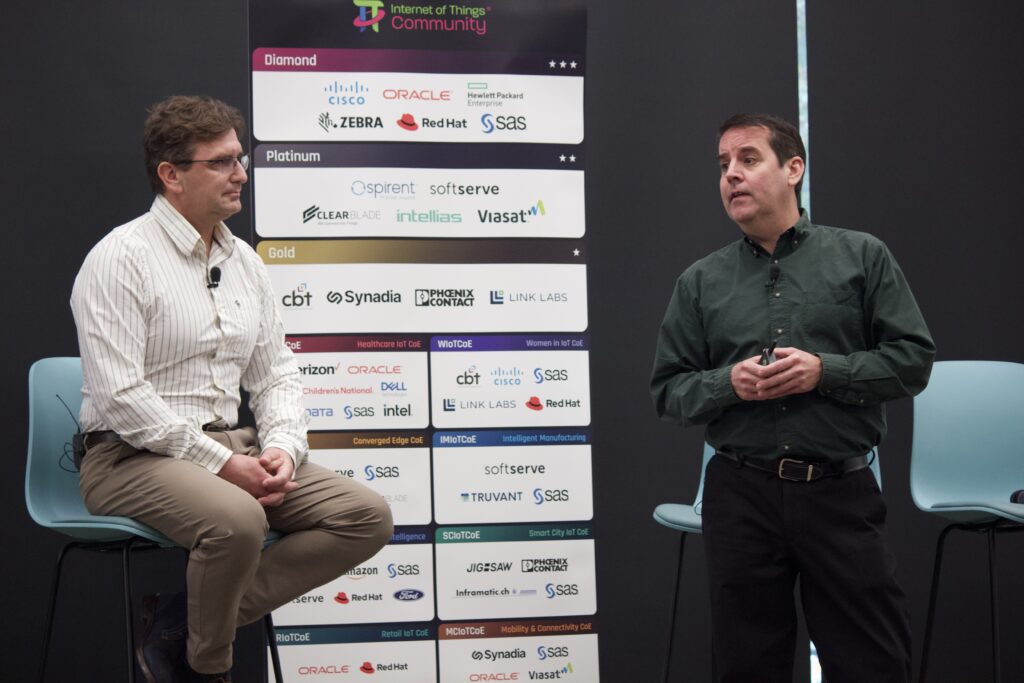
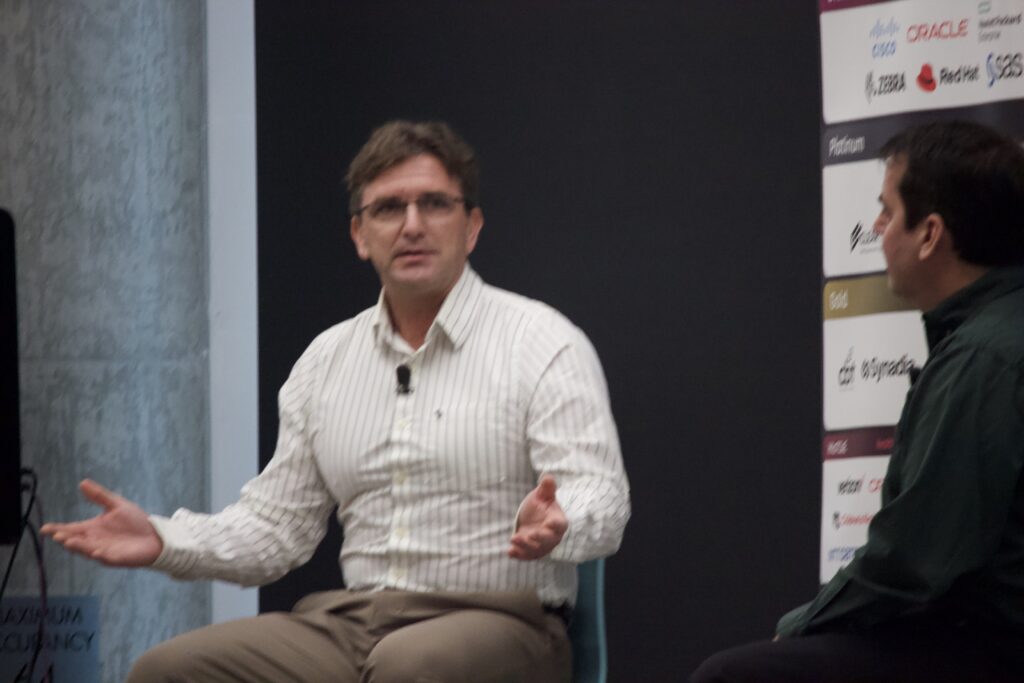
 Andrew De La Torre, Group Vice President of Technology, Oracle Communications is responsible for making strategic decisions that increase the overall competitive position of Oracle Communications and defining direction for the best-in-class products and solutions that help customers compete in a rapidly evolving technology landscape. De La Torre also leads the technical sales, business development and acquisitions teams for the business unit. Prior to joining Oracle, De La Torre spent 21 years at Vodafone in roles as Chief Technology Officer, Vodafone Americas and Vodafone Malta, as well as Chief Technology Strategy Officer for Vodafone Group. During his tenure, he led multi-tiered, highly skilled teams in the delivery of consumer and enterprise solutions across mobility, fixed network, IoT, cloud, and security. He also oversaw project execution across IT, mobile and fixed network, data centers, and business systems. In addition to his telecom experience, De La Torre has consulted in other industries such as oil and gas and construction, and with Fortune 500 companies that have tapped his experience in corporate governance, finance, strategic planning, and technology transformation.
Gabor Bona, Sr. Manager of Solution Engineering, Oracle Food and Beverage, is a seasoned IT Professional. Having lived and worked on three continents (Europe, Africa, North America) he has had ample opportunities to gather a lot of valuable experience. Innovation, finding and exploiting opportunities that make his colleagues and customers lives easier is what gives meaning to his work. Gabor is a highly creative individual – his head is always full of ideas. He has a very diverse career in this business that spans all aspects from Sales and Pre-Sales to Consulting, Support, Implementation, Training and much more. His passion is inventing solutions that enables customer to reach business goals easier and faster.
Key Takeaways:
Many may not think of Oracle as active in the operational technology space – you probably see us as a database company or a cloud company, maybe enterprise resource planning
space- however Oracle has more than 45,000 employees dedicated to vertical industry IoT solutions today. And we have IoT development happening in more than 21 industries.
High level overview of Oracle first Industry verticals
- Public safety
- Food & beverage
- Construction
- Manufacturing
- Healthcare
- Energy & water
A recently issued Omdia report canvased around 4500 enterprises across 56 different countries. All of these companies were already engaged in some manner of IoT or connected applications projects- and 91% of them actually said that their program already met or exceeded their expectations for ROI. This is an interesting thermometer of how pervasive IoT and connected things are becoming in the world today. Further, the Omdia report goes on to suggest that by 2026 we will cross the one trillion-dollar threshold, which is astounding.
Whichever industry you are in it is now prime time for IoT.
Oracle is committed to creating connected applications beginning with these six industries:
- Public safety
- Food & beverage
- Construction
- Manufacturing
- Healthcare
- Energy & water
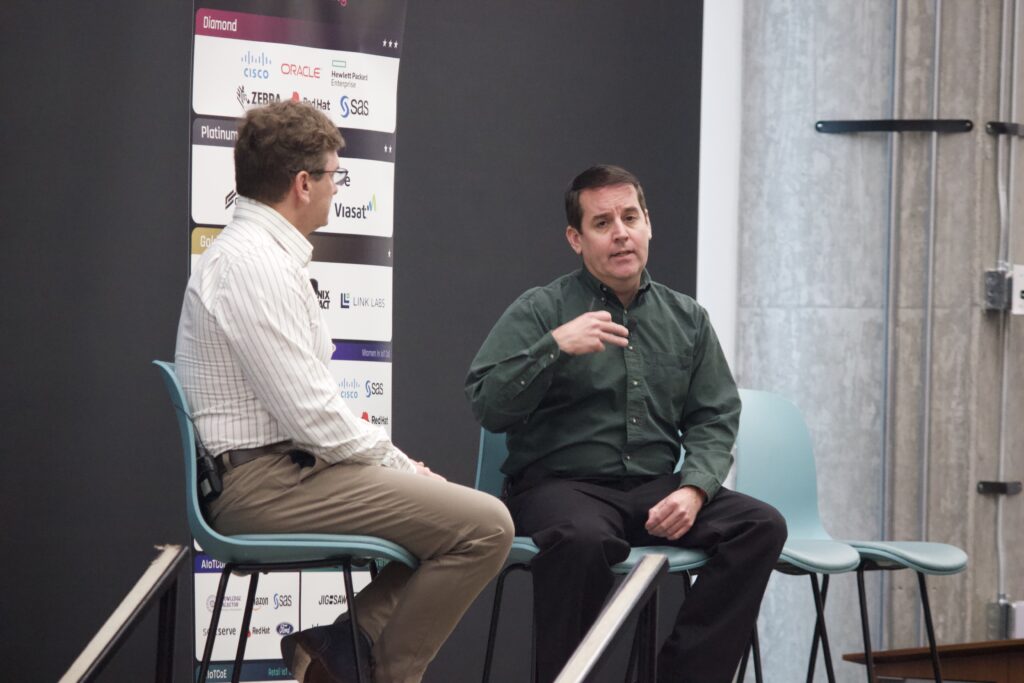
“Oracle recently announced a solution in public safety, providing true real time voice and video communication for first responders and moving away from two-way radio solutions and non-real-time bodycams that get sideloaded at the end of the day and providing real livestreams to dispatch center. It includes edge devices in the vehicles themselves running image recognition software, and sensors in the lightbar of the vehicles to provide other data. We are taking advantage of the IoT world to really transform the first responder space.” Andrew De La Torre
The Enterprise Communications Platform:
When speaking to customers it is the complexity of building connected solutions that is the biggest challenge. If a customer is out in the market and they need to pick an application developer, they also need to find a cloud to run it in, and maybe an analytics solution, and finally engage with their device provider. Each time they run a project they need to go through this ecosystem building exercise – which can result in a significant integration overhead. Oracle’s goal was to make the ecosystem easy to work with.
“We want to make it easy for Oracle to build these things and we want to make it easy for the ecosystem we have to work with to be able to then work with us.” Andrew De La Torre
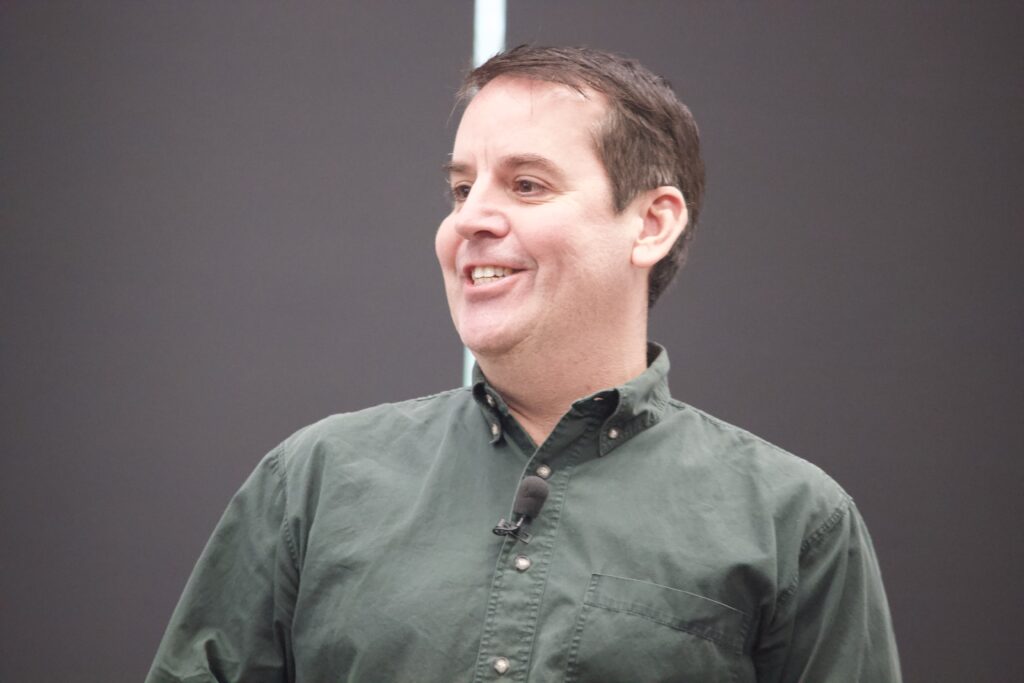
The Enterprise Communication Platform is an IoT platform that was built specifically for use within Oracle. Oracle took an API-first approach in how it opened up these capabilities to how to best work with developers, device partners, and more, to build solutions.
What is the power of these technologies and the change they can affect?
While we’ve all been in restaurants, it’s unlikely we know or appreciate how hard it is to be successful in the food and beverage business and understand the challenges or trends happening there.
A well-run restaurant might have:
- 35% food costs
- 35% labor costs
- 20% fixed costs
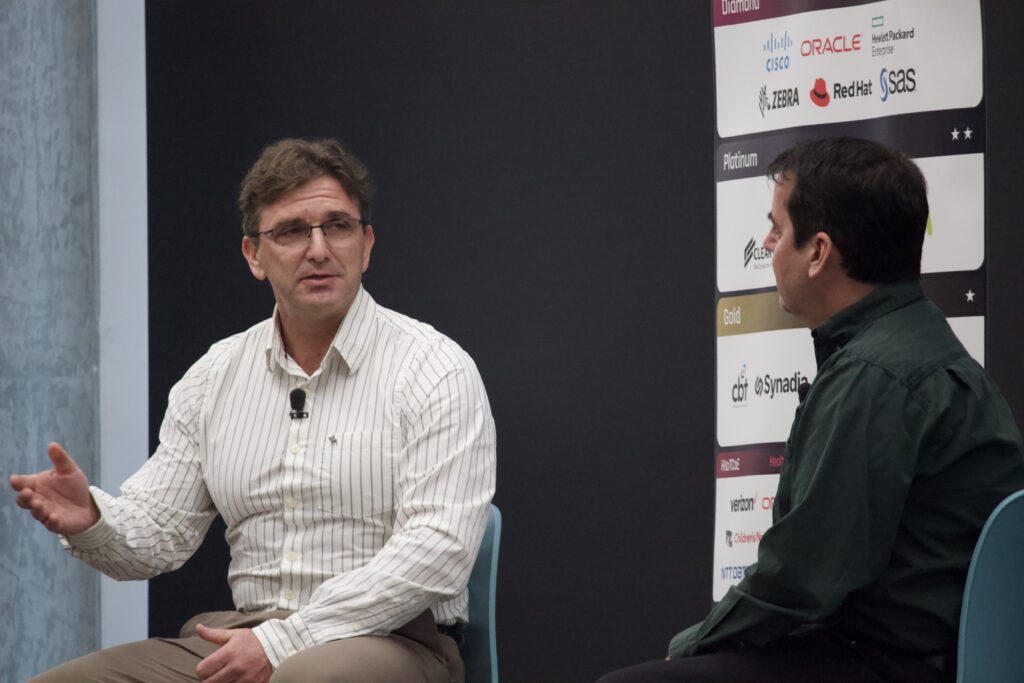
“If you are clearing 2-5% as net of your ticket cost, you are a well-run business. As technologists it is our job to help these businesses be successful. It’s the aggregation of marginal gains, if technology can help these businesses gain two more points, then that would be a successful business.” Gabor Bona
There are a lot of challenges restaurants are contending with:
- Staffing crunch and labor shortage: Technology comes into play here, but there may soon be gig workers in this space. We have to have solutions in place where it’s possible to enable the workforce to trade shifts in real time and ensure the restaurant is optimally staffed.
- Food waste: About 50% of produced food goes to waste. We can help restaurants using IoT sensors, to automate the supply chain and manage the inventory level.
- Customer acquisition: Oracle’s strategy to help restauranters to become successful is focused on customer acquisition. Primarily, by adding additional sales channels to operations and ensuring the kitchen and production management is in lockstep since adding online ordering or Uber Eats should not mean customers at the tables are waiting an hour and a half for their meals.
Point of sale is no longer a transactional platform it’s a platform for innovation. We are talking about kitchen management, online ordering, additional sales channels, and on top of that we can add AI and Machine Learning to the greater picture.
There has to be a tangible benefit though. AI can be used to predict and forecast to help restauranteurs to make much more accurate forecasts.
How can AI help restauranteurs avoid certain situations? For example, a quick service restaurant in a major airport is not well-stocked as several crowded flights land after significant delays. With AI, the delays could be communicated to the restaurant’s supplier and empower them to stock this outpost in the airport so that all of the hungry travelers coming off of the flights can order meals
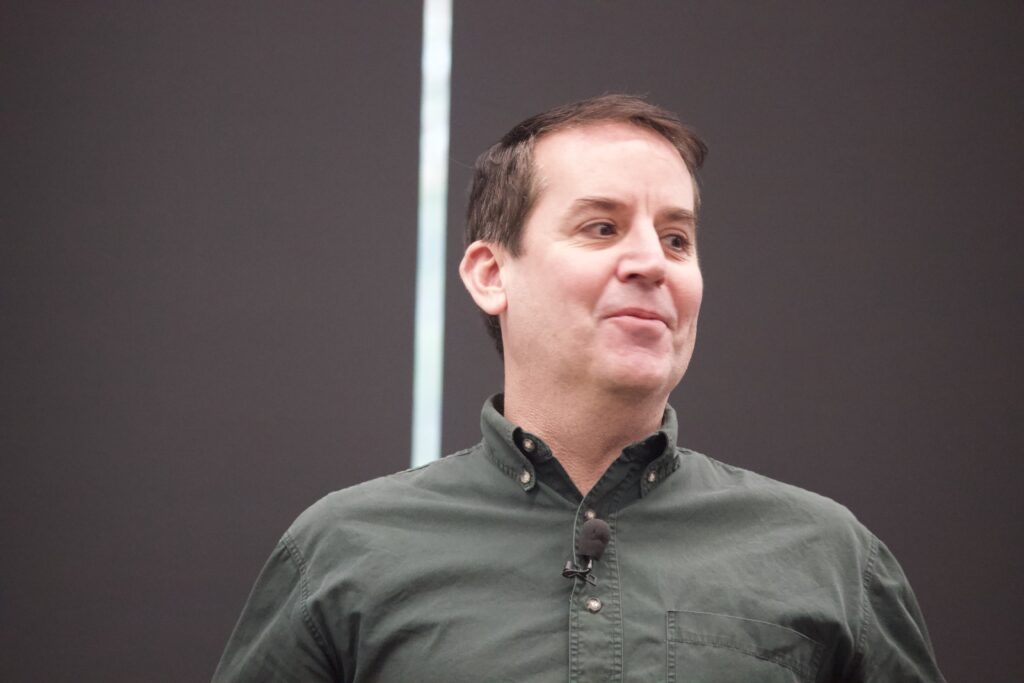
“Turning point of sale into a utility like water and energy is key to developing the restaurant business. Point of sale is a utility that needs to be always there, always on, always reliable. Point of sale is no longer a transaction platform it is kitchen management, online ordering, payment management, not to mention AI/ML” Gabor Bona
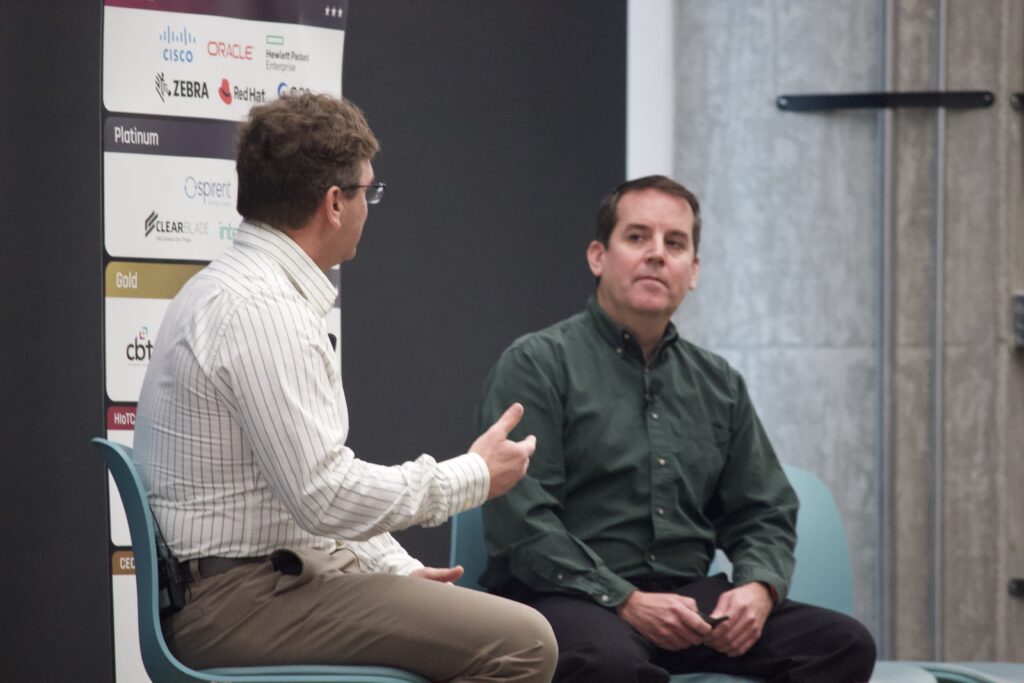
AI can be used to predict and forecast to help restaurateurs to make much more accurate forecasts.
Better customer experience will help to drive the business forward. The very essence of a restaurant business is the hospitality. By reducing the complexity, it gives the business more opportunity to do what they do best. The hospitality is the essence of this industry – it’s why people dine out.
What’s next?
From a communications perspective, we are now at a prime time with IoT technology. 40% of respondents in the Omdia survey are relying on cellular for connectivity, with a large portion utilizing 5G. The communications industry is positioned to be massively transformational, and even more and more pervasive in the solutions that go out.
In the restaurant industry Oracle anticipates voice will make a significant impact on addressing the labor shortage challenges. The goal is not to get rid of staff in the restaurant, it’s utilizing on-site staff in the best way they can and allowing drive-through workers to essentially work from anywhere.