Session Abstract:
This session highlights the need of data accuracy and security in smart city applications. There are different levels of security, at different levels of smart city infrastructure applications.
Such as, at the inception (sensor level, where data is generated), the data need to be accurate, properly calibrated sensors should be used, complying with the environmental specifications.
At the aggregation, control and SCADA level, the needs are different. And at servers or cloud level, the security needs are different. These layers also create a distinction between what we generally define as IT and OT layers.
With data now being transferred from Edge directly to the cloud, many of these layers are now eliminated. During this session, the presenters will talk about the standards and approvals at sensor level, information security and anomaly detection when logging data into cloud and using AI to boost data integrity in smart cities.
Speakers:
 Having worked in Product Marketing and Product Management roles at Siemens and Schneider Electric, Haroon Rashid joined the solution development and solution marketing at Phoenix Contact in 2011, as Industry Manager for Transportation infrastructure. He also assumed responsibility for Building Automation when Phoenix Contact embarked upon the journey into the Building Automation Vertical. Currently, working as Senior Business Development Manager for Smart Buildings and Smart Cities, Haroon is focused on developing go to market strategies, identifying and developing repeatable solutions, and establish technology collaboration with IoT companies. Haroon has also been one of the founding members of Pennsylvania Automated Vehicle Coalition, senior member of IEEE and chairs/leads the Industry Value Proposition committee at Phoenix Contact. This committee is focused on Digitalization, Industrie 4.0 and Industrial IoT business. Apart for smart building solutions, Haroon has also been engaged with Tunnel and Railroad solutions. Haroon holds a bachelors in electrical engineering and a master in business administration. He has presented as SME at conferences including Global ITF, Oracle Open World, CharIN, IAEI and Smart Building events.
 Hasan Kaya, IT Product Manager, Jig Saw, A pathfinder for the connected world, Hasan Kaya has supported enterprises to enhance their products and services through JIG-SAW’s IoT technology since 2019. Having broad experience in the development of various IoT layers (including application, network, processing, and perception), Hasan is responsible for identifying the needs of customers and driving the realization of IoT as a Product Manager. Hasan also represents JIG-SAW in the Connectivity Standards Alliance, an organization with over 600 member companies which creates and manages IoT technology standards, including the Zigbee and Matter standard.
 Stefan Haydn is working in industrial automation for over 25 years. In addition, he is also a software developer and CEO of a Swiss company and an American company. Politically President of the SVP Münchenstein Baselland and delegate of the SVP Switzerland.
 Dr. Mai Truong leads the product team at IronYun to design the Vaidio vision platform for customers’ needs and expansions in physical security and safety. Since joining IronYun in 2017, Mai has worked closely with strategic partners in the US and Europe to architect solutions in high-performance computing and security monitoring networks. Mai received B.S. degrees in Math and Physics from Texas A&M University and a Ph.D. in Physics from the University of California, Berkeley. Her current interest is the applications of AI vision in smart city, transportation, and manufacturing environments.
Chase Shulda is a Business Development Application Engineer for Phoenix Contact USA. He helps to manage the Building Automation market across the US from both a business and technical perspective. Chase has developed industrial automation solutions for a variety of different industries and applications while at Phoenix Contact. His experience working with industrial controls and troubleshooting automation systems has led to the success of many smart building projects for some of the nation’s top companies. Chase also holds a Bachelor’s degree in Physics and a Master’s degree in Nanotechnology from Penn State University.
Key Takeaways
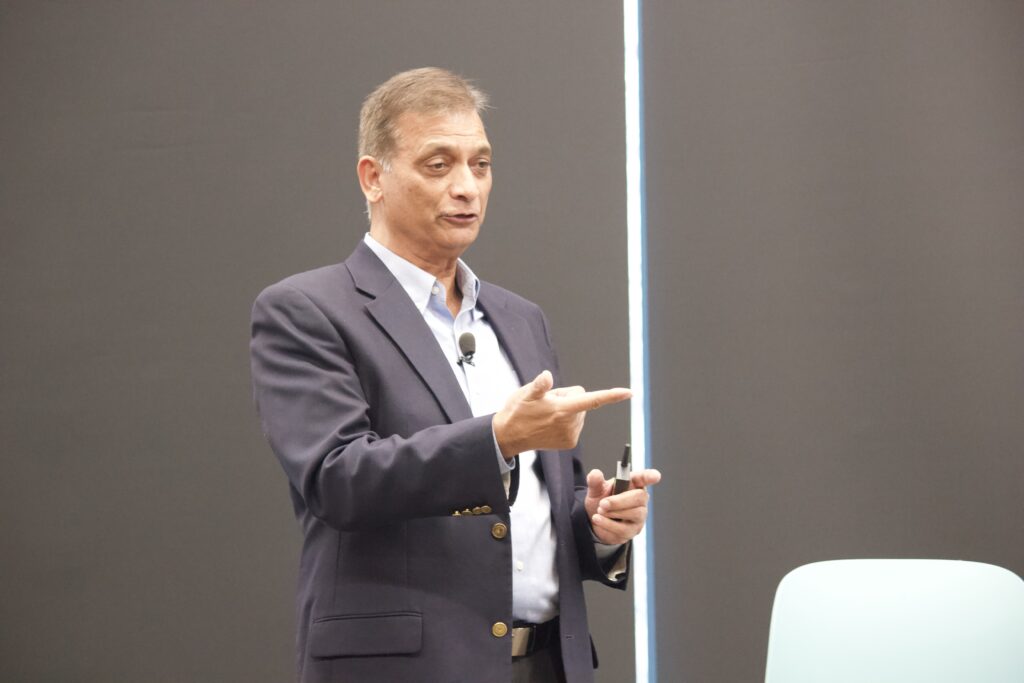
A hybrid model is most appropriate because you need human intervention but our reflexes are not fast enough to identify and analyze the data. So we need AI but it is only as intelligent as the formulas you feed in and the relationships you include. @PhoenixContact Haroon Rashid
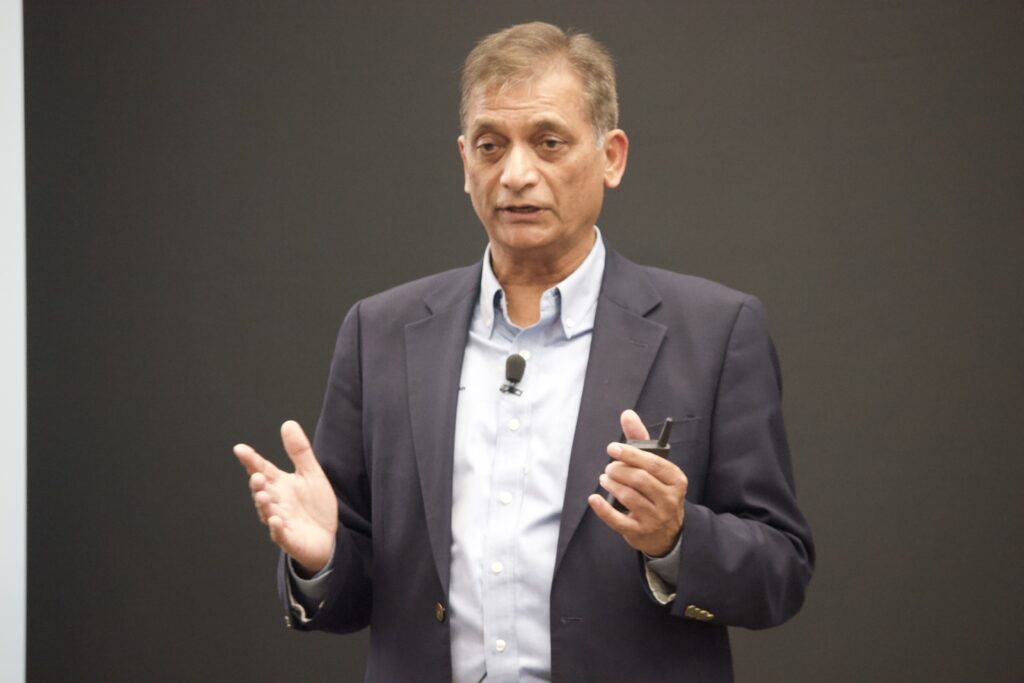
When we talk about the architecture the network is a Fiberoptic Ring-topology, but why would we use this? It’s because you need a fail safe system. In tunnels whenever human lives are at risk you need a fail safe system. Stefan Haydn Inframatic.ch
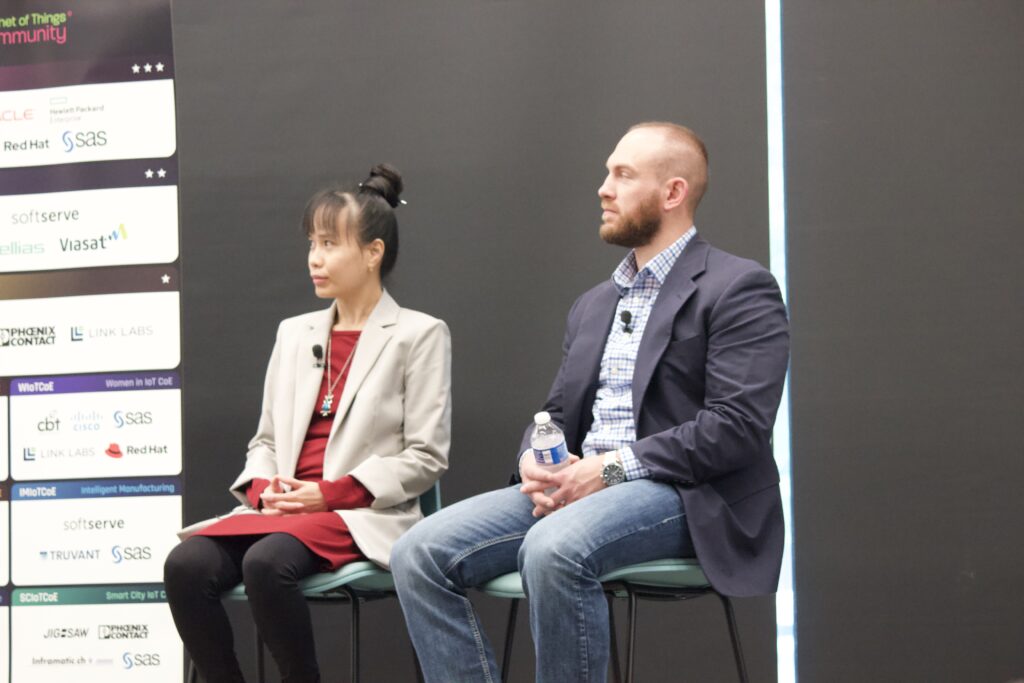
What is the role of AI in data flow to maintain integrity?
We have the input- we need complete data with guaranteed accuracy.
AI models and engines which continuously learn and improve.
Output- which has data integrity- no misdetection caused by fatigue. Dr. Mai Truong @IronYunInc